No, rabbits shouldn’t wear collars. They’re animals that instinctively want to free roam and putting a collar on them is most likely going to result in injury. If you want to walk your rabbit on a leash, then you should use a harness (not a collar) for this.
Though a collar might seem a good idea as a form of identification (and method to secure your rabbit), a harness is a far better option.
Read on to learn more about why you shouldn’t use collars and how harnesses are safer.
Why Rabbits Shouldn’t Wear Collars

There are a bunch of reasons why collars and rabbits shouldn’t go together.
- Unsecure: A too-large collar can slip off, leaving your rabbit unsecured. If you’re out and about with them, this can get dangerous quickly.
- Difficulty breathing: A too-small collar will restrict your rabbit’s breathing.
- Neck damage: If you pull on a leash attached to a collar, their fragile neck bones can be severely damaged.
- Skin irritation: A collar rubbing on your rabbit’s neck can lead to fur loss, sore spots, and inflammation.
- Panic: It can get caught on something – a branch, their cage, or something else from around them and the rabbit might panic and hurt themselves trying to get free.
- Injury: Some rabbits don’t like the feeling of a collar, and will thrash around trying to escape. In the worst cases, this could result in their neck breaking.
What to Use if Not Collars for Rabbits?
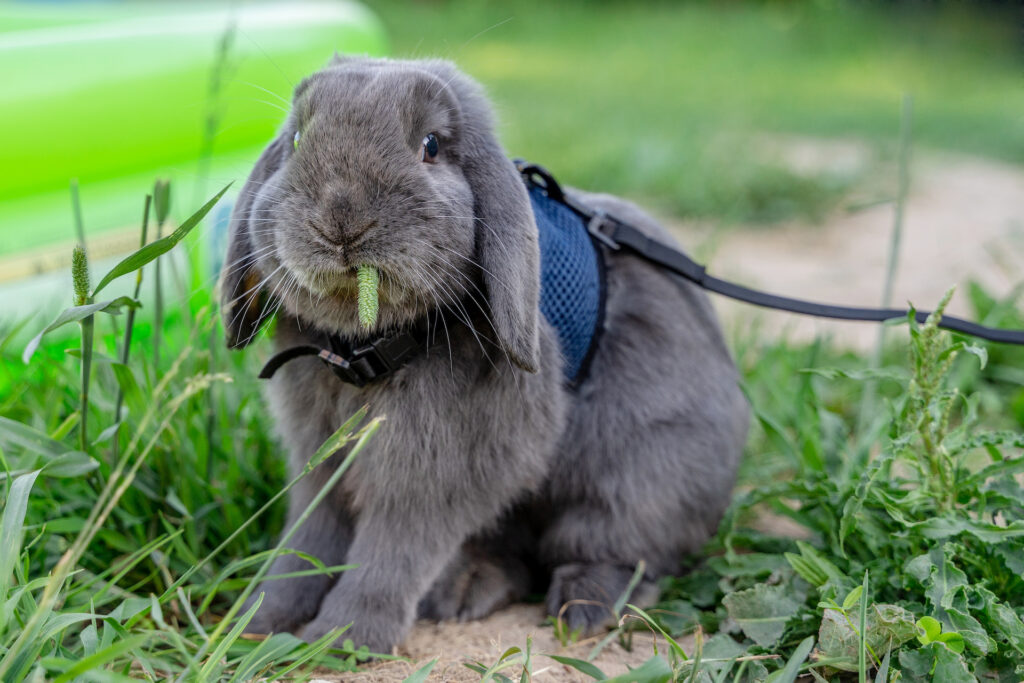
The safest alternative to a collar for your rabbit is a harness. Though some rabbits simply won’t tolerate wearing a harness, most will tolerate and perhaps one day like it.
If you’re worried about them getting lost, you can still attach a tag with your contact information to the harness and you can also get microchips from the vet.
Harnesses are safer to use, as it spreads their body weight evenly – so any sudden movements won’t be putting pressure on just their neck. They can also be adjusted to a perfect fit and used not only for walking but for rabbits to do agility courses too.
When Choosing a Harness for Your Rabbit
You should avoid rope harnesses and figure 8 harnesses at all costs – they can seriously hurt your rabbit if they try to escape it.
Good options for harnesses are:
- H-harness: This is probably the best option. It has two adjustable sections that evenly distribute any pressure across their whole bodies.
- Vest harness: This goes over your rabbit like a vest and usually has velcro straps that you can tighten.
- Shoulder harness: This harness fits over the rabbit’s shoulders and under their legs, and while they’re more comfortable for the rabbit, they’re harder to find in the store.
How to Fit a Harness on a Rabbit
You’ll need to have a secure hold on your rabbit to start with and slip the harness over their head. Soothe them and speak in a soft voice while you do this to keep them calm.
Then, adjust the straps, making sure they’re tight enough to be secure but loose enough to not be painful. You should be able to fit two fingers under the straps.
How to Train Rabbits to Use a Harness
Once the harness is on, your rabbit will need to learn how to walk while wearing it.
Let them get used to the feeling by wearing the harness around the house for short intervals. The next step should be attaching a leash and walking around your yard every day. Once they get used to it, try taking them somewhere quiet for a short walk, and bring plenty of treats for encouragement.
Be patient with your rabbit at this stage – they aren’t used to being in a harness and will take some time to get to grips with it. And remember – not every rabbit will be a fan of wearing a harness.
Should I Take My Rabbit on a Walk?
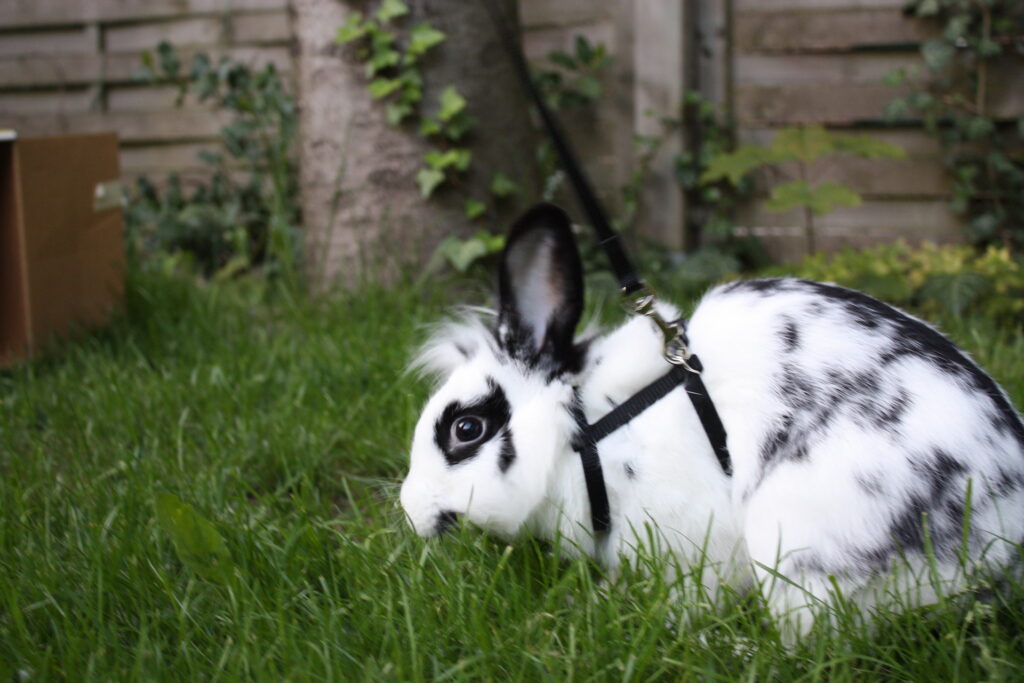
This one is up to you, as there are benefits and drawbacks of taking your rabbit for a walk.
Benefits of taking your rabbit on a walk include that it helps them to get more exercise (therefore improving their fitness and strengthening their muscles) and provides them with mental stimulation.
However, there are a bunch of drawbacks too, such as your rabbit panicking and suffering from extreme stress, getting loose and running away, and danger from predators (like dogs being walked).